
FishVerify: ID & Regulations
FishVerify, LLC.Sports
4.3245.00 Reviews
- Version
- 5.7
- Installs
- 100.00K
- Age Rating
- Everyone
Screenshots
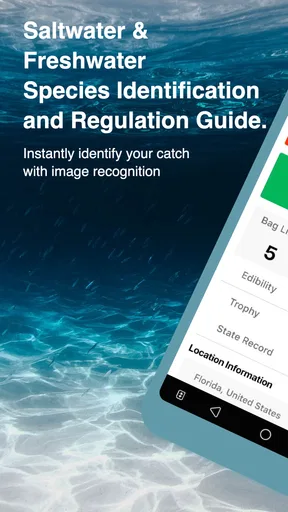
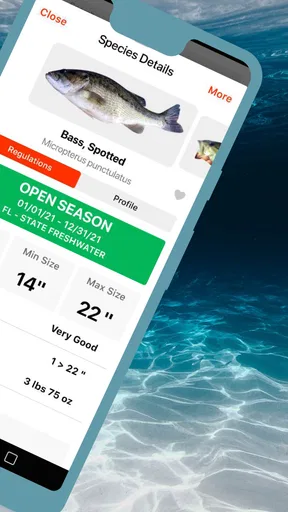
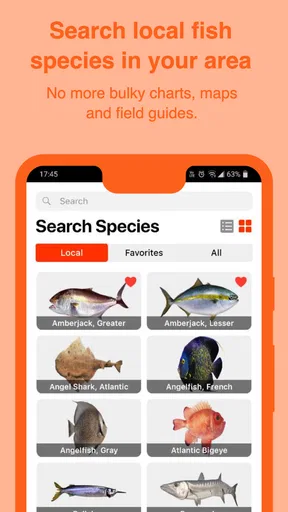
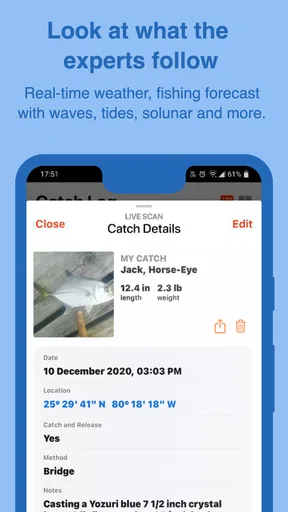
Our Review of FishVerify: ID & Regulations
 Analysis by Appyee
I found FishVerify: ID & Regulations most useful when I treated it as a quick fishing companion rather than a complete replacement for local knowledge. The app sits in the sports category and combines fish identification, regulation lookup, catch logging, and related reference tools in one mobile experience. That combination gives it a stronger first impression than a simple species-recognition utility, because it can potentially help at several points in the same trip: before casting, when a fish is landed, and later when I want to remember what happened.
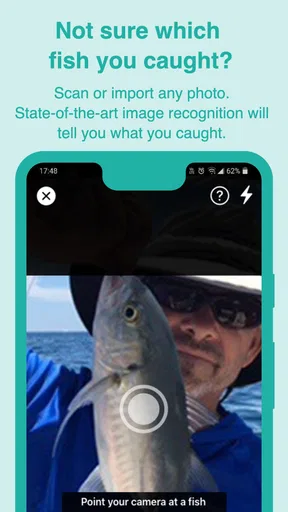
The first week is where the app makes its best case. A fish-identification tool has an obvious appeal when I am unsure what I have caught, especially if the fish is unfamiliar, young, partly obscured, or seen in poor light. Instead of switching between a camera tool, a search engine, a regulation page, and a notes app, I can begin with one fishing-focused place. That narrower purpose makes the experience feel more practical than a general image-recognition app.
From first catch to a lasting fishing habit
I look at the first stretch with FishVerify as a chance to build a routine, not just test whether a photo produces a useful fish ID. The section follows how small choices—when to check a rule and what to note after a catch—can make the app more helpful over repeated trips. That habit also raises a broader question: how comfortably can different anglers use it in real fishing conditions?
Why the first week feels useful
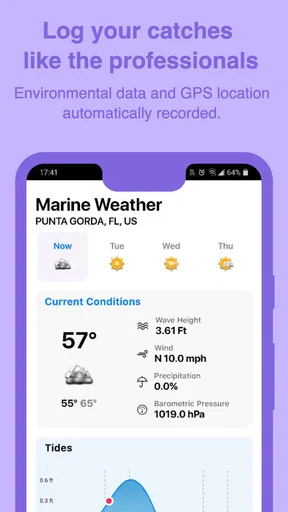
During an initial outing, the most valuable workflow is simple: identify the fish, check the relevant rules, and record the catch while the details are still fresh. I would not wait until I got home to do all three. A quick note made beside the water is more likely to include the bait, location, weather, or personal observation that I would otherwise forget. The logging function therefore matters as much as the identification feature. It turns a one-time answer into a personal record.
There is also a useful psychological benefit. New anglers often hesitate before keeping or releasing a fish because they are not completely sure what they are looking at. Having a dedicated reference on the phone can make that moment less stressful. It does not replace responsible judgment, but it encourages me to pause and verify rather than rely on a guess or on a blurry memory of a picture seen elsewhere.
My practical advice is to photograph the fish before handling it repeatedly, then compare the result with the app while paying attention to visible details rather than accepting the first suggestion automatically. Body shape, fins, markings, and the surrounding water can all affect an identification. A camera result is a starting point, not permission to ignore local rules. That distinction is especially important with similar-looking species.
The regulations side is what separates this app from many ordinary fishing journals. A journal can tell me what I caught, but it cannot be the only thing I consult when size limits, seasons, protected species, or regional restrictions matter. FishVerify, LLC. has built the product around that practical connection between recognition and compliance. I appreciate that focus because the most useful fishing app is not necessarily the one with the most entertainment; it is the one that helps me make fewer avoidable mistakes.
A realistic day beside the water
Imagine arriving at a lake I have not visited recently. I can use the app before fishing to refresh my expectations, then open it after landing a fish that does not look quite like the species I had in mind. Once I have a likely identification, I can check the regulation information instead of depending on another angler’s casual advice. If I release the fish, I can still log the catch and add a note about the conditions. That sequence gives the app a role throughout the day rather than only during a novelty photo test.
The catch log becomes more valuable when I use consistent wording. I would record the same kinds of details each time: species, general place, lure or bait, and a short note about what worked. Even without turning the app into a scientific database, repeated entries can reveal personal patterns. I might notice that one location produces better results at a certain time, or that a lure I nearly stopped using performs well under specific conditions. The insight comes from the habit, not from the mere existence of a log.
That is one of the less obvious strengths here: identification and logging can support each other. A doubtful catch encourages a lookup, while a confirmed catch gives the log more meaning. Used carefully, the app becomes a bridge between learning fish species and improving my own fishing routine.
What changes after the novelty fades
After the first few outings, the identification feature naturally becomes less exciting. I do not need to photograph the same familiar fish every time, and experienced anglers may already recognize the common species in their area. This is the point where many specialized apps lose their place on a phone. FishVerify has a better chance of staying useful because the regulation reference and catch history offer recurring reasons to return.
For me, the long-term question is not whether the app can identify a fish once. It is whether I will remember to open it when the situation actually calls for it. The answer depends on how often I fish and how varied my locations are. Someone who fishes regularly in changing waters has more reason to revisit species information and local rules. Someone who visits one familiar spot and catches the same fish repeatedly may find the app useful only on occasional trips.
The log can extend its life if I use it as a review tool rather than a box-ticking exercise. Before a future trip, I would look back at earlier entries and use them to prepare a small plan: which bait to bring, which species I have not encountered recently, and which conditions produced the most interesting catches. That is a more durable habit than opening the camera simply to see whether it recognizes an obvious fish.
Regulations are valuable, but they require attention
Regulation information is potentially the most responsible part of the app, but it is also the area where I would be most cautious. Rules can depend on location, season, species, size, possession limits, and special local conditions. I would always make sure the information I am viewing matches the water I am fishing and the current circumstances. When a decision involves keeping a fish, uncertainty is a reason to verify with the relevant authority, not to interpret a convenient result generously.
This is not a criticism unique to FishVerify. It is a general limitation of putting complex rules into a compact mobile interface. The convenience is real, but convenience can make users overconfident. I like the app best when it acts as a fast reminder and an organized reference, while official local guidance remains the final checkpoint for a serious compliance question.
A useful routine is to check the regulations before leaving home, when I have time to read carefully, and then use the app beside the water for a quick confirmation. That reduces the temptation to make a rushed decision while holding a fish and dealing with gear, weather, or other people. It also makes the app part of preparation rather than an emergency tool used only after confusion appears.
How much maintenance does it demand?
The maintenance burden is fairly light if I use only the core functions. There is no need to create a complicated system of tags or write long reports after every cast. A short catch entry is enough to preserve useful memory. The challenge is consistency. If I log one trip in detail and ignore the next five, the record becomes less helpful and I lose the chance to compare conditions.
I would keep the habit deliberately small. After a catch, I would save the identification and add one or two meaningful observations instead of trying to document everything. A note such as “overcast, shallow edge, soft plastic” is more likely to be repeated than a demanding form that turns every catch into paperwork. This approach also addresses one of the app’s likely friction points: logging can feel like work when the fishing itself is moving quickly.
Storage and organization can also become a personal issue over time. A large collection of entries is only useful if I can understand it later. I would avoid vague notes such as “good day” and use simple, repeatable descriptions. The app can hold the record, but I still have to create information that my future self can interpret.
Because the app is free to download, trying this workflow costs little at the start. There are in-app purchases ranging from under a dollar to under fifty dollars per item, so I would pay attention to which optional functions I actually use before spending anything. The free entry point makes experimentation easy, but I would not assume that every advanced convenience is necessary for a casual angler. A person who only wants occasional identification may have no reason to purchase extras.
Where fatigue can set in
The first source of fatigue is repeated identification. Once I know the common species in my usual waters, taking a picture for every catch can feel slower than simply fishing. The second is the need to interpret results responsibly. If the image is unclear or the species is similar to another one, the app may begin a research process instead of ending it. That is still useful, but it is not the instant certainty some people expect from camera-based tools.
The third is context. Fishing often happens in bright glare, low light, rain, wind, or awkward positions. A fish may be wet, moving, partly hidden, or photographed at an angle. Those conditions are not ideal for any visual identifier. I would treat the app as strongest when I can capture a clear image and weakest when the photo is rushed. Cleaning the lens and taking a second picture from a better angle can make the workflow less frustrating, but it also adds time.
Another possible source of wear is switching between curiosity and compliance. A casual user may open the app for identification and then encounter rules that require careful reading. That is appropriate, but it can make the experience feel heavier than a simple photo app. Personally, I prefer that seriousness to a tool that offers a confident-looking label without helping me think about whether the catch can legally be kept.
There is also a question of audience. A complete beginner may appreciate the guided reference, while an experienced angler with strong local knowledge may see the identification feature as redundant. The latter user may still value the log, especially when traveling, but should not expect the app to transform a well-established fishing practice. Its value is additive rather than revolutionary.
How it compares with the usual alternatives
The usual alternative is a combination of tools: a general image-search service for identification, an official wildlife or fisheries page for rules, and a notes app for catches. That combination can be more authoritative in specific places, particularly when I need the latest local regulation wording. It is also fragmented. I have to remember where each piece of information lives, and the catch record is disconnected from the species lookup.
A printed field guide remains better in a few situations. It works without a battery, does not depend on taking a usable photograph, and can provide visual comparison across many species at once. On the other hand, it is less convenient for logging and may not combine identification with regulation checks. I would carry both a field guide and FishVerify on a serious trip if I expected poor reception or difficult conditions.
A basic notes app is still the better choice for someone who wants a highly flexible fishing diary. I can design my own categories, add long observations, and organize entries exactly as I prefer. FishVerify is more focused: it gives the record a fishing-specific context, but that focus may feel restrictive to anglers who want detailed maps, equipment inventories, or extensive trip planning in the same place.
That comparison clarifies the app’s real position. It is not simply competing with identification tools, and it is not a full replacement for every fishing resource. Its advantage is the connection between species recognition, rules, and catch memory. If those three needs overlap in my routine, the app earns a place. If I only need one of them, a specialized alternative may be simpler.
Who should keep using it?
I would recommend it most strongly to new anglers, people fishing in unfamiliar waters, and anyone who regularly forgets the details of past catches. It is also a sensible companion for families, because identifying a fish and checking its rules can turn a quick catch into a more thoughtful learning moment. The Everyone age rating makes it suitable for a broad audience, although younger users should still have an adult handle decisions about handling fish and following local regulations.
Traveling anglers may get particular value from the combination of reference and logging. A species that is obvious at home may be unfamiliar elsewhere, and a regulation mistake is more likely when I am outside my normal routine. The app gives me a single place to begin, provided I remain careful about location-specific information and do not treat a quick result as final authority.
I would be less enthusiastic for a highly experienced angler who already carries an official regulation source and keeps a detailed journal elsewhere. That person may find the app’s central features repetitive. I would also skip it if my main goal were advanced navigation, weather forecasting, boat management, or a deep social fishing community. FishVerify is focused, and its focus is precisely why it works for some users and feels incomplete for others.
Practical setup for better long-term value
My recommended approach is to install it before a planned trip, test the identification workflow on known fish, and decide in advance what information I want to record. That avoids learning the interface during a time-sensitive catch. I would also review the relevant regulation area before traveling and save enough battery for photography and logging. These small steps reduce the chance that the app becomes an unused download after one curious test.
For recurring use, I would set a modest target: record the catches that teach me something, not necessarily every single fish. A new species, an unexpected location, an unusual lure result, or a catch that raised a regulation question is worth preserving. This selective method keeps the log meaningful and prevents the maintenance burden from overwhelming the fishing itself.
FishVerify is currently at version 5.7 and requires Android 8.0 or later. Those details matter when I am deciding whether to install it on an older spare phone used outdoors. I would check compatibility before a trip rather than discovering a problem at the shoreline. Since the app is free, there is little downside to testing it on the device I actually plan to carry, while remembering that optional purchases are available inside the app.
My long-term verdict
With an average rating of 4.3 from around 657 ratings and more than 100 thousand installs, FishVerify has found a clear audience among anglers who want more than a simple species label. I understand the appeal. The app brings together the three moments that are easiest to separate in ordinary fishing routines: recognizing the fish, understanding the rules, and remembering the catch.
In my experience, its lasting value depends on using the log and regulation reference, not repeatedly testing the camera. The identification feature is the hook, but the habit is what keeps the app relevant. If I use it to prepare, make careful decisions beside the water, and build a useful record over time, it earns permanent space on my phone. If I only open it for occasional curiosity, the novelty will probably fade quickly.
I would describe it as a practical free starting point rather than an all-in-one fishing command center. It rewards anglers who want a focused tool and who are willing to verify important rules responsibly. It is less suitable for people seeking detailed trip planning, advanced navigation, or a completely customizable diary. For the right user, though, the strongest reason to keep FishVerify is the connection between identification and responsible action.
That is why I would recommend trying it before deciding whether it belongs in a regular fishing routine. Give it several trips, not just one camera test. Record a few meaningful catches, use the regulation reference before making decisions, and see whether the stored information changes how you prepare for the next outing. If it does, the app has lasting value. If it does not, a field guide, official local resource, or ordinary notes app may suit the way you fish better.
FishVerify: ID & Regulations is developed by FishVerify, LLC. It is free, carries an Everyone content rating, and offers optional in-app purchases. Those basics make it easy to try, but the real decision is personal: this is a good fit when fish identification, rules, and a repeatable catch log belong in the same fishing habit.
Verdict
Strengths of FishVerify: ID & Regulations
- Quickly identifies many fish species from a photo.
- Includes region-specific fishing regulations and limits.
- Useful for checking size, season, and possession rules.
- Supports responsible fishing and catch-and-release decisions.
- Simple interface makes field use convenient.
Limitations of FishVerify: ID & Regulations
- Identification accuracy can drop with blurry or poorly lit photos.
- Regulation details may vary by location and require verification.
- Some features or content may require a paid subscription.
- The app may need internet access for full functionality.
- Coverage and rules may be limited outside supported regions.
Similar Picks in This Category
View All
BeSoccer: Soccer Live Score
BeSoccer apps4.3

Cricbuzz - Live Cricket Scores
Cricbuzz.com3.7

NFL
NFL Enterprises LLC2.4

Da Fit
MO YOUNG LIMITED3.6

ESPN
Disney4.5

LiveScore: Live Sports Scores
LiveScore Limited4.5
Frequently Asked Questions
What is FishVerify: ID & Regulations used for?
FishVerify: ID & Regulations is designed to help anglers identify fish species and check fishing rules before keeping a catch. After taking or uploading a photo, the app can provide a likely species identification and display related information, such as size limits, bag limits, seasons, and other regulations where supported. It is useful in the field, but it should be treated as a reference tool rather than a substitute for official local guidance.
How accurate is the fish identification feature?
The identification feature can be helpful when the fish is photographed clearly, in good lighting, and from an angle that shows its distinguishing characteristics. However, image-based recognition is not guaranteed to be correct, especially with similar-looking species, unusual coloration, damaged specimens, or poor-quality photos. Before deciding whether a fish may be kept, compare the result with an official wildlife resource or ask a qualified local authority.
Does FishVerify provide fishing regulations for my location?
The app is intended to provide regulation information based on supported locations, but coverage and detail may vary by state, region, waterway, and species. You may need to select or confirm your fishing location for the most relevant results. Regulations can change during the season, so anglers should verify important details—particularly size limits, possession limits, closed seasons, and protected species—with the current official regulations published by the responsible authority.
Can I use FishVerify without an internet connection?
Some functions may depend on an internet connection, particularly photo-based identification, account-related features, map content, and downloading current regulation information. Availability while offline can therefore be limited and may depend on what the app has previously loaded or saved. If you are fishing in an area with weak reception, check the necessary rules in advance and keep an official offline copy of the regulations whenever possible.
Is FishVerify a reliable replacement for a fishing license or official regulations?
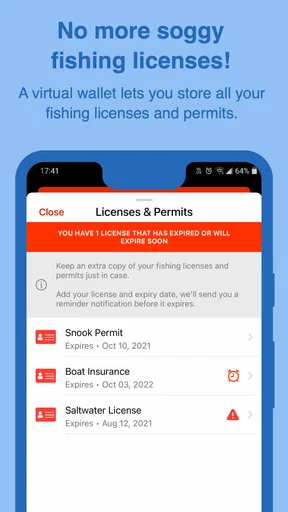
No. FishVerify can make it easier to research a catch and find potentially relevant rules, but it does not replace a fishing license, permit, regulation booklet, or instructions from a local fisheries agency. Anglers remain responsible for following the laws in the exact location where they fish. Because rules and conservation requirements may change, always confirm the app’s information through official sources before keeping, releasing, transporting, or selling fish.
